

How to Price a Website Project: Fixed Price, Hourly or Retainer?
In this article
Pricing is the part of freelancing and agency work that most people find hardest. Charge too little and you burn out; charge too much without explaining the value and you lose the project. There is no single correct number, but there are clear ways to think about it. This guide compares the three common pricing models and gives you a practical method for calculating a quote.
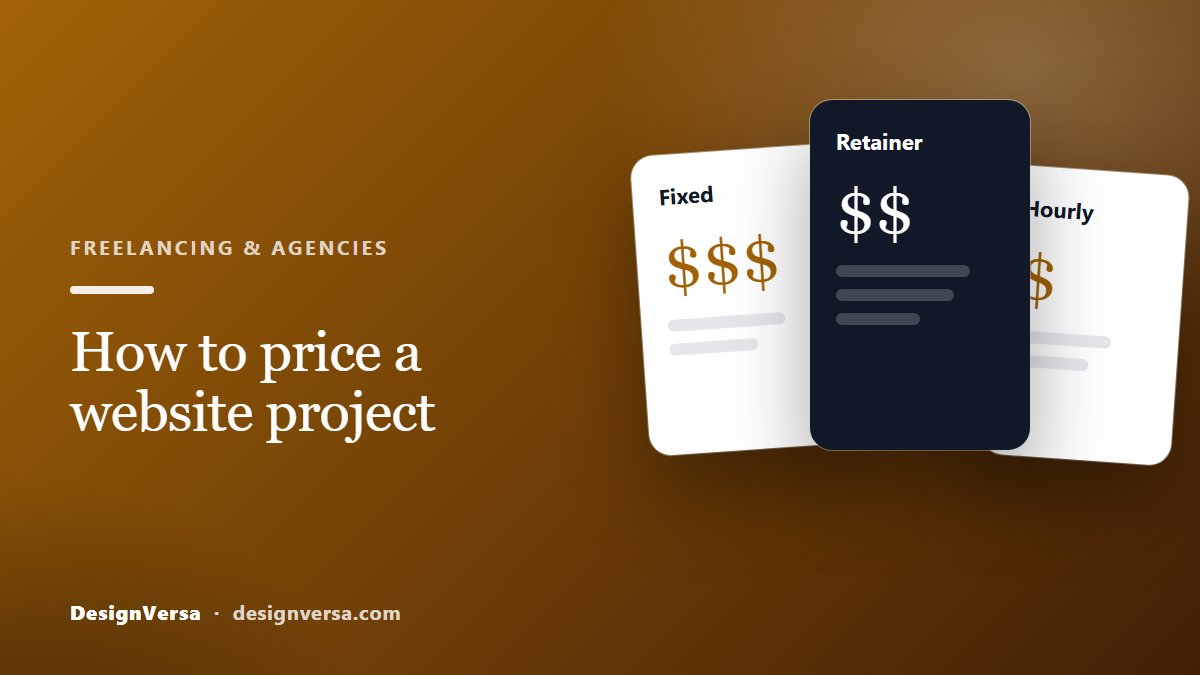
The three common pricing models
Fixed price
You quote one price for a defined scope. Clients like the certainty, and you benefit when you work efficiently. The risk is scope creep, so a fixed price only works with a detailed scope and a clear change process.
Hourly or daily rate
You bill for time spent. It is fair when the scope is unclear, for example ongoing improvements or exploratory work, but clients cannot predict the final cost, and you are penalised for being fast.
Retainer
The client pays a monthly fee for an agreed amount of work or availability. It suits ongoing support, content updates and continuous improvement, and it gives you predictable income.
| Model | Best for | Main risk |
|---|---|---|
| Fixed price | Defined projects such as a new website | Scope creep |
| Hourly | Unclear or changing work | Unpredictable cost for the client |
| Retainer | Ongoing care and improvement | Unclear expectations about what is included |
A simple method to calculate a fixed price
- List every task. Discovery, sitemap, design for each page type, development, content entry, forms, search setup, testing, launch, training and project management.
- Estimate hours for each task, based on your own past projects.
- Add a buffer of 15 to 25 percent for feedback rounds and surprises.
- Multiply by your target hourly rate. Set that rate so it covers your costs, taxes, unpaid time and the income you want.
- Compare with the value. A website that brings in new customers is worth far more than the hours it took to build.
Keep track of real hours on every project, so your estimates improve. A simple time and budget tracker shows quickly which projects were profitable and which ran over.
Offer three options
Presenting Essential, Growth and Premium options helps clients choose rather than debate whether to hire you at all. Build the middle option so it is the one you want to deliver, and make the differences clear: number of pages, design directions, content support, and length of aftercare. You can see how this looks in a proposal in our guide to what to include in a web design proposal.
Structure the payments
A common structure is 40 percent to start, 30 percent at design approval and 30 percent at launch. The deposit reserves your time and filters out clients who are not serious. Put the schedule in your proposal and your contract.
Protect yourself from scope creep
- State exactly what is included and what is not.
- Limit revision rounds and say what extra rounds cost.
- Use a written change request for anything new, with the effect on price and timeline.
Our project brief and change request templates make this routine instead of awkward.
Add a care plan after launch
Many clients need updates, backups and small changes after the site goes live. Offering a monthly care plan turns a one-off project into recurring income and keeps their site healthy. The Scope pack includes a statement of work and a website care plan agreement with three plan levels.
Do not race to the bottom
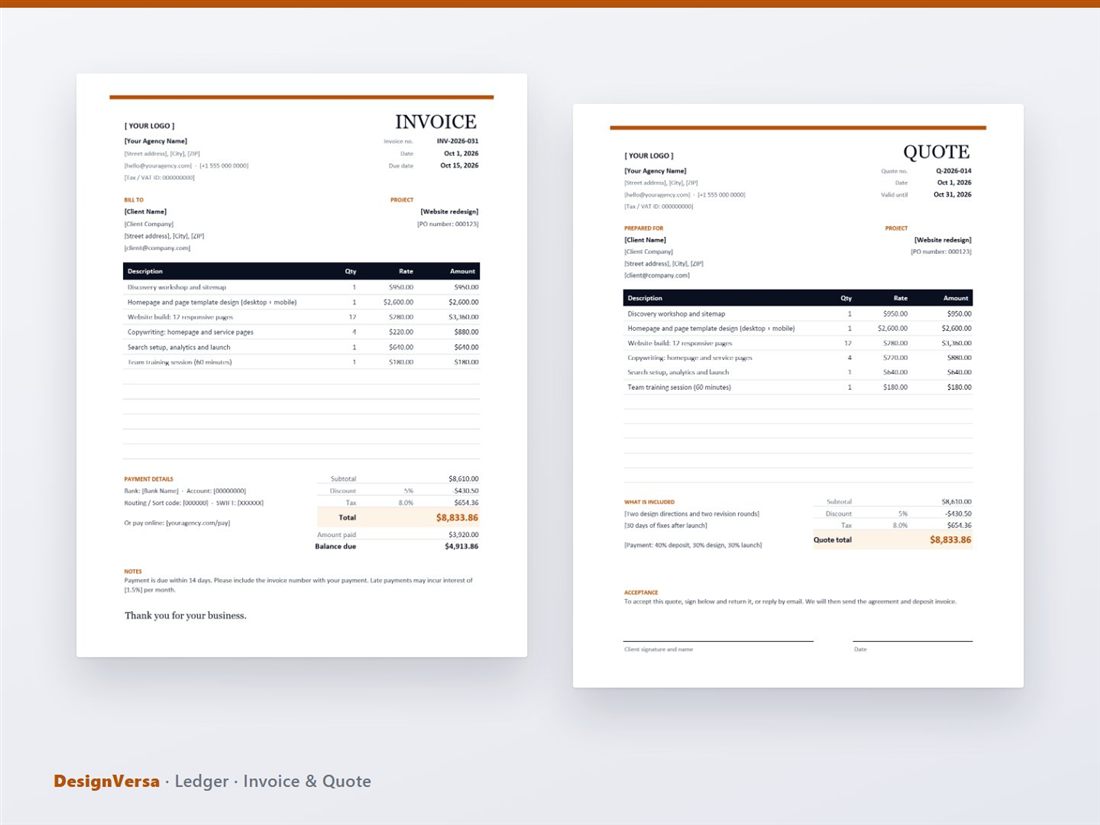
The cheapest quote attracts the most difficult clients. Compete on clarity, process and results instead. When a client pushes back on price, remove scope rather than discounting, so the price stays tied to the work. For ready-made documents, browse our invoice, quote and project brief templates.
Ready-made templates for your next project
HTML website templates, admin dashboards and editable business templates, with live previews and instant download.